Taking part in the NEXZOS programme
Buy together and decide for yourself
The assessment is running now. The start follows in December 2026 or February 2027
Every organisation still sitting with Windows 10 in 2028 faces the same bill and the same question about its data. That argues for doing it together: one shared assessment model, one schedule, one price list, and for each organisation its own decision and its own procurement route. What you buy together with others you buy more cheaply than alone, and the knowledge from each assessment makes the next one sharper.
The operating system itself is already here: it runs on ordinary office hardware and can be seen live. What this programme organises is the step after that, from a working system to hundreds of workstations running on it in practice.
Why as a programme
Migrating together costs less
Three things get cheaper once more organisations walk the same route
Why this year counts
Three dates are already fixed
Close enough to solve together and far enough away to do it calmly
October 2028: the Extended Security Updates close
Until then every Windows 10 workstation costs money to keep secure: € 52 in year one, € 105 in year two, € 210 in year three, € 367 per workstation in total. Years one and two are already paid or already committed, so the amount a switch can still save is € 210. After that the machine carries on running on the last update it received.
11 December 2027: the Cyber Resilience Act takes effect
From that date requirements apply to products with digital elements, including the operating system on the workstation. Anyone still migrating in 2028 is doing so while those requirements are already in force.
28 June 2025: the European Accessibility Act already applies
The accessibility requirements apply today. A workstation change is the natural moment to take them on board, rather than making a separate project of them later.
The dates come from the relevant European and Microsoft publications. The Compliance page sets out topic by topic what is finished and what is still in progress.
How it runs
The programme in four steps
After each step comes a real decision to continue or to stop
Your own estate and your own applications, costed against the ESU route. You choose the depth: Scan, Assessment or Full assessment. The report is yours and stays usable, even if you stop after this.
On the basis of your own report you sign up to take part in the programme, with the number of workstations you commit and the period in which you want to roll out. That number sets your place in the range.
The programme starts once enough workstations are committed. From that point the prices, the release calendar and the capacity planning are fixed for all participants.
Each participant rolls out on their own date, with their own pilot beforehand. The joint planning makes sure the capacity is there at the moment you need it.
Taking part in the assessment leaves you completely free. The assessment is a standalone assignment with its own decision afterwards. You buy one step at a time, and only that step. If your own figures show that another route works out better, that is the outcome of the report.
The budget range
What volume does to the price
Three entry levels and three tiers that move with the total
Scan
- Hardware judged per device class, from your own export
- Ten applications you name yourself
- Cost comparison against the ESU route over three years
- Report of 3 to 4 pages, walked through on a 30-minute call
Licence after a Scan: € 80 per workstation.
Assessment
- Every machine judged individually, so the verdict holds per serial number
- Up to thirty applications, each with a route
- Costs over three and five years, per workstation and for the whole estate
- Data protection section and the procurement route for your country
- Report of 8 to 10 pages, plus a 60-minute session with IT and procurement
Licence after an Assessment: € 65 per workstation.
Full assessment
- Test installation on two machines from your own estate, so the verdict is proven rather than predicted
- Full application inventory and full risk list
- Energy use and expected lifespan per device class
- Data protection section with your privacy lead, including input for a DPIA
- Pilot plan with acceptance criteria, ready to attach to an order
Licence after a Full assessment: € 55 per workstation.
The volume tiers as a proposal
| Total workstations committed in the programme | On the licence per workstation | On support in years two and three |
|---|---|---|
| 1,000 to 2,499 | 10 per cent lower | 5 per cent lower |
| 2,500 to 4,999 | 20 per cent lower | 10 per cent lower |
| 5,000 and above | 30 per cent lower | 15 per cent lower |
The tier applies to all participants who signed before the start, even where their own number is smaller than the tier. These three tiers use the same percentages as the launching customer arrangement and replace that arrangement rather than stacking on top of it: anyone who can claim both gets the higher of the two. Tiers, boundaries and the threshold for going ahead are a proposal; the final form follows.
What goes into your budget
| Line | Amount | When |
|---|---|---|
| Assessment | € 675, € 1,250 or € 1,750 | One-off, in 2026 |
| Licence per workstation | € 80, € 65 or € 55 | One-off, at rollout. Year one support and upgrades included |
| Support per workstation per year | € 12 in year two, € 15 thereafter | Annually, including the move to the next major release |
| Rollout work | Per hour, or per workstation at a fixed rate | At rollout, and it comes out lower the deeper the assessment went |
For your type of organisation
What this means for you
Choose your type and number of workstations and the answer moves with it
At 250 workstations we suggest a Assessment . With a large estate the question is in what order it happens. The Full assessment delivers a pilot plan with acceptance criteria for that, which can be attached to an order directly.
Please note. At this size your own commitment often sets the tier for the whole programme on its own. That is negotiable, and we prefer to have that conversation early.
Indication based on the published rates, excluding rollout work and excluding the volume tier. The amounts are exclusive of VAT. Your own assessment recalculates this on your own estate.
What taking part delivers
Now and in the longer term
On the left within the programme and on the right for as long as the estate runs
Within the programme
- The programme price on the licence and on support, fixed before your rollout begins
- Every workstation that moves across takes the remaining ESU years off the budget, and those are the most expensive years
- Applications and peripherals already worked out at another participant are known quantities for you
- One joint plan, so the capacity on your date is fixed
- A data protection section and a procurement file written in terms your lawyer can check
- A seat in the user group, the forum that helps decide what goes into the system next
In the longer term
- Software cost from 40 per cent lower on the same estate
- Hardware life 35 to 50 per cent longer, which pushes the replacement round back
- A release change stays an update on the same machines, rather than a hardware project
- GDPR-by-design, with a data processing agreement and input for a DPIA from day one
- Data and management within the jurisdiction you choose, on a foundation that is open to audit
- The user group continues after the rollout, so the workstation stays steered by the organisations that work on it
Programme status
Participating organisations
Filled in as soon as the first organisations have signed.
Pledged workstations
Sets the step in the band, and so the price for every participant.
Threshold to go ahead
The number of pledged workstations needed before the programme starts.
Figures appear here as soon as there are figures. Until then the dashes stay.
Register
Register your organisation
Registering means we talk your situation through and send an assessment proposal. Turning that into an assignment afterwards stays your decision.
You will hear from us within two working days, with a proposal for the level that fits your estate and a date for a conversation of 30 to 40 minutes. If you would like to see it running first, ask for a live demo; it is free and leaves you free to decide.


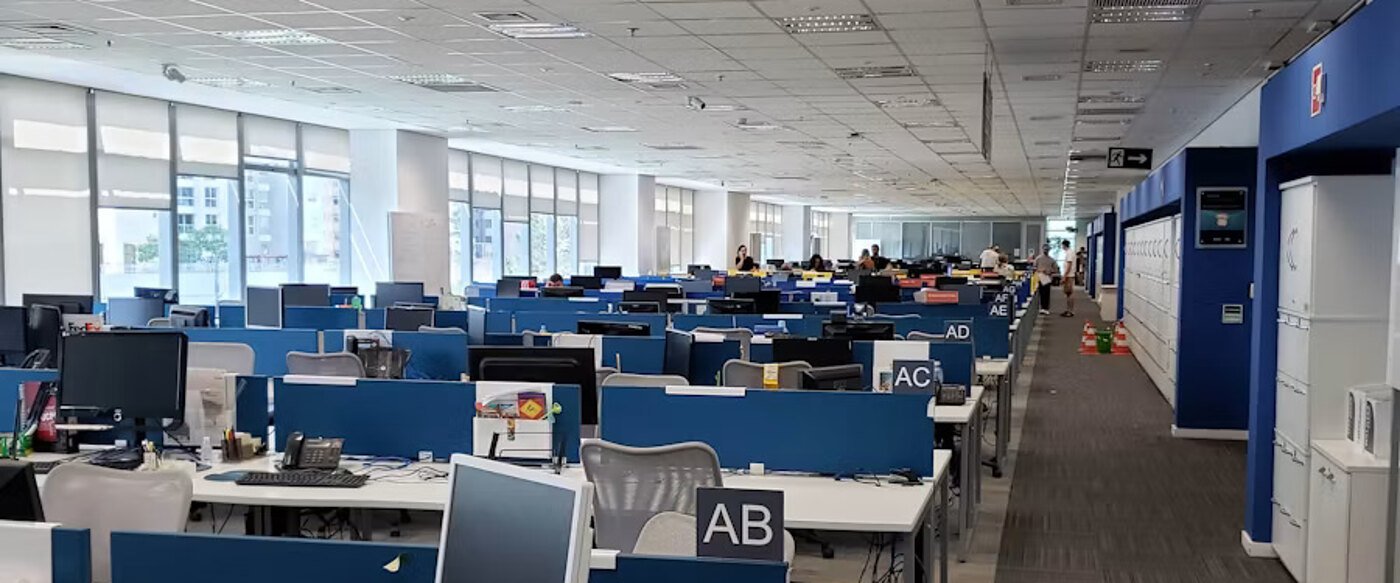
From an SME with fifteen workstations to an agency with thousands: the programme is open to all three, and the pledged total counts for everyone.
Honest about the edges
On tendering
A joint programme can be read as joint procurement. Each participant stays responsible for its own procurement route and its own justification. We supply the figures and the wording for the award memo; your procurement lawyer or your board decides.
What we claim about this
We say that software cost is from 40 per cent lower, that hardware life is 35 to 50 per cent longer, and that data protection was part of the design. How compliant the end result is follows from the way you set it up, and that is what the data protection part of the assessment covers.
What you commit to
To the step you sign, and to that step alone. Assessment, pilot and rollout are three standalone assignments with three decisions. Escrow, an audit of the source code and an exit arrangement are to be arranged for anyone who asks.